
Assessment of PMTCT Success Rates Based on Antiretroviral Interventions and Feeding Options: A Prospective Cohort Study
DOI:
https://doi.org/10.21106/ijma.266Keywords:
- Assessment,
- Antiretroviral Interventions,
- PMTCT,
- Success Rates,
- Feeding Options,
- Cohort
Abstract
Background: The success of any prevention of mother-to-child transmission (PMTCT) program is assessed by the proportion of HIV-exposed infants that sero-convert at the end of all risk exposures. Although adopting the best feeding option for HIV-exposed infants is one of the factors that impact PMTCT outcomes, there is limited data on the assessment of PMTCT success rates based on antiretroviral interventions and feeding options. This study assesses the success rate of PMTCT service based on antiretroviral interventions and feeding options.
Methods: Eighty-five HIV-infected mothers previously in care were enrolled in a prospective cohort study. Folders and structured questionnaires were used to extract data on mother-infant pair and the first CD4, count of infected mothers on enrolment at PMTCT clinic. Dry blood spot samples were obtained from exposed infants for early infant diagnosis.
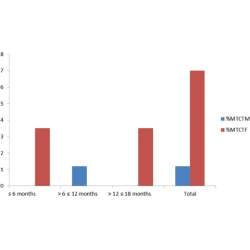
Results were analyzed using the SPSS software. Results: The mean age of enrolled mothers was 31.3 ± 4.4 years, and an average CD4+ T-lymphocyte count of 368.6 ± 216.2 cells/µl. Seven (8.2%) of the HIV-exposed infants were positive for HIV-1 based on early infant diagnosis results. Overall PMTCT success rate (PMTCTSR) was 91.8%. HIV-1 prevalence of 5.0%, 0% and 21.1% was found among infants of patients who opted for breastfeeding, replacement feeding, and mixed feeding respectively thus yielding PMTCT success rates of 95%, 100% and 78.9%. Pediatric antiretroviral interventions success rates in HIV-exposed infants was 95.8%, 80.0% and 66.7% based on age groups ≤ 6 months, > 6 ≤ 12 months, and > 12 ≤ 18 months respectively.
Conclusion and Global Health Implications: Quality PMTCT service is vital for successful prevention of mother-to-child transmission of HIV. Implementation of more dynamic approaches such as adherence to option B+ guidelines in PMTCT service in our settings can further reduce mother-to-child transmission of HIV and improve outcomes.
Downloads
Similar Articles
- Tamara H. Hussein, Melina Mgongo, Jacqueline G. Uriyo, Damian J. Damian, Babill Stray-Pedersen, Sia E. Msuya, Margareta Wandel, Exclusive Breastfeeding Rates and Factors Associated with Exclusive Breastfeeding Practices in Northern Tanzania: Measurement using Two Different Methodologies—24 Hours Recall and Recall Since Birth , Vol. 8 No. 1 (2019): International Journal of Maternal and Child Health and AIDS
- Anays Murillo, Mary Bachman DeSilva, Lora L. Sabin, Nafisa Halim, Harriet Chemusto, Philip Aroda, Julia Gasuza, Davidson H. Hamer, Anna Larson Williams, Barbara Mukasa, Lisa J. Messersmith, Rachael Bonawitz, Impact of a Maternal Prevention of Mother-to-child Transmission of HIV (PMTCT) Intervention on HIV-exposed Infants in Uganda , Vol. 9 No. 3 (2020): International Journal of Maternal and Child Health and AIDS
- Gopal K. Singh, Anagha Lokhande, Romuladus E. Azuine, Global Inequalities in Youth Mortality, 2007-2012 , Vol. 3 No. 1 (2015): International Journal of Maternal and Child Health and AIDS
- Modupe Rebekah Akinyinka, Foluke Adenike Olatona, Esther Oluwakemi Oluwole, Breastfeeding Knowledge and Practices among Mothers of Children under 2 Years of Age Living in a Military Barrack in Southwest Nigeria , Vol. 5 No. 1 (2016): International Journal of Maternal and Child Health and AIDS
- Gopal K. Singh, Hyunjung Lee, Lyoung Hee Kim, Shanita D. Williams, Social Determinants of Health Among American Indians and Alaska Natives and Tribal Communities: Comparison with Other Major Racial and Ethnic Groups in the United States, 1990–2022 , Vol. 13 No. Continuous (2024): International Journal of Maternal and Child Health and AIDS
- Maxwell P. Dapar, Benjamin N. Joseph, Rotkangmwa C. Okunlola, Josiah Mutihir, Moses P. Chingle, Mathilda E. Banwat, Pregnancy and Birth Outcomes Among Women on Antiretroviral Therapy: A Long-term Retrospective Analysis of Data from a Major Tertiary Hospital in North Central Nigeria , Vol. 10 No. 2 (2021): International Journal of Maternal and Child Health and AIDS
- Neza Guillaine, Wilberforce Mwizerwa, Jackline Odhiambo, Bethany L. Hedt-Gauthier, Lisa R. Hirschhorn, Placidie Mugwaneza, Jean Paul Umugisha, Felix Rwabukwisi Cyamatare, Christine Mutaganzwa, Neil Gupta, A Novel Combined Mother-Infant Clinic to Optimize Post-Partum Maternal Retention, Service Utilization, and Linkage to Services in HIV Care in Rural Rwanda , Vol. 6 No. 1 (2017): International Journal of Maternal and Child Health and AIDS
- Agnes Langat, Tegan L. Callahan, Isabella Yonga, Boniface Ochanda, Anthony Waruru, Lucy W. Ng’anga, Abraham Katana, Brian Onyango, Benson Singa, Stephen Oyule, George Githuka, Lennah Omoto, Jane Muli, Thorkild Tylleskar, Surbhi Modi, Associations of Sociodemographic and Clinical Factors with Late Presentation for Early Infant HIV Diagnosis (EID) Services in Kenya , Vol. 10 No. 2 (2021): International Journal of Maternal and Child Health and AIDS
- Wah Wah Myint, Human Immunodeficiency Virus (HIV) Knowledge and Stigma: Findings from a Cross-sectional Survey , Vol. 15 (2026): International Journal of Maternal and Child Health and AIDS
- Agnes Napyo, James K Tumwine, David Mukunya, Josephine Tumuhamye, Anna Agnes Ojok Arach, Grace Ndeezi, Paul Waako, Thorkild Tylleskär, Detectable HIV-RNA Viral Load Among HIV-Infected Pregnant Women on Treatment in Northern Uganda , Vol. 9 No. 2 (2020): International Journal of Maternal and Child Health and AIDS
<< < 1 2 3 4 5 6 7 8 9 10 > >>
You may also start an advanced similarity search for this article.
Published
How to Cite
Issue
Section
License
Copyright © 2018 Kolawole A. Fasakin, Christopher T. Omisakin, Idowu O. Adebara, Wasiu A. Ajetunmobi, Adebayo A. Adeniyi, Ayodele J. Esan, Olufunke B. Bolaji, Oluwafemi D. Ajayi, Abayomi J. Afe. Published by Global Health and Education Projects, Inc., USA.

This is an open-access article distributed under the terms of the Creative Commons Attribution-NonCommercial-ShareAlike 4.0 International License , which permits others to remix, transform, and build upon the work non-commercially, provided the original author is credited and the new creations are licensed under the same terms.