
Assessment of PMTCT Success Rates Based on Antiretroviral Interventions and Feeding Options: A Prospective Cohort Study
DOI:
https://doi.org/10.21106/ijma.266Keywords:
- Assessment,
- Antiretroviral Interventions,
- PMTCT,
- Success Rates,
- Feeding Options,
- Cohort
Abstract
Background: The success of any prevention of mother-to-child transmission (PMTCT) program is assessed by the proportion of HIV-exposed infants that sero-convert at the end of all risk exposures. Although adopting the best feeding option for HIV-exposed infants is one of the factors that impact PMTCT outcomes, there is limited data on the assessment of PMTCT success rates based on antiretroviral interventions and feeding options. This study assesses the success rate of PMTCT service based on antiretroviral interventions and feeding options.
Methods: Eighty-five HIV-infected mothers previously in care were enrolled in a prospective cohort study. Folders and structured questionnaires were used to extract data on mother-infant pair and the first CD4, count of infected mothers on enrolment at PMTCT clinic. Dry blood spot samples were obtained from exposed infants for early infant diagnosis.
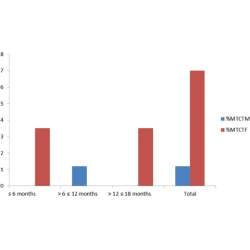
Results were analyzed using the SPSS software. Results: The mean age of enrolled mothers was 31.3 ± 4.4 years, and an average CD4+ T-lymphocyte count of 368.6 ± 216.2 cells/µl. Seven (8.2%) of the HIV-exposed infants were positive for HIV-1 based on early infant diagnosis results. Overall PMTCT success rate (PMTCTSR) was 91.8%. HIV-1 prevalence of 5.0%, 0% and 21.1% was found among infants of patients who opted for breastfeeding, replacement feeding, and mixed feeding respectively thus yielding PMTCT success rates of 95%, 100% and 78.9%. Pediatric antiretroviral interventions success rates in HIV-exposed infants was 95.8%, 80.0% and 66.7% based on age groups ≤ 6 months, > 6 ≤ 12 months, and > 12 ≤ 18 months respectively.
Conclusion and Global Health Implications: Quality PMTCT service is vital for successful prevention of mother-to-child transmission of HIV. Implementation of more dynamic approaches such as adherence to option B+ guidelines in PMTCT service in our settings can further reduce mother-to-child transmission of HIV and improve outcomes.
Downloads
Similar Articles
- Charles Chibuisi Ehiemere, Ishaku Adamu Akyala, Bisayo Adetuyi Ogundipe, Chukwuebuka Clement Nri-Ezedi, Peter Joseph Anzaku, Waryit Esther Yonah, Efe Mary Imokhai, Isaac Onyebuchi Okohu, Idowu Olapemi Makinde, Ngozi Miriam Chimzobam-Nnalue, Beyond Access: Behavior Change and Gendered Realities in the Adoption of Digital Health Tools for Maternal, Newborn, and Child Health in Nigeria , Vol. 15 (2026): International Journal of Maternal and Child Health and AIDS
- Alexander Suuk Laar, Veioshnee Govender, Individual and Community Perspectives, Attitudes, and Practices to Mother-to-Child-Transmission and Infant Feeding among HIV-Positive Mothers in Sub-Saharan Africa: A Systematic Literature Review , Vol. 2 No. 1 (2013): International Journal of Maternal and Child Health and AIDS
- Amol Jamkhande, Bhagyashree P. Agre, Neelam Gavali, Anjali Rajesh Gaikwad, Sanpreet Singh Sachdev, Association Between Maternal Periodontitis and Preterm Low Birth Weight in Indian Populations: A Literature Review , Vol. 15 (2026): International Journal of Maternal and Child Health and AIDS
- Foluke Adenike Olatona, Jesupelumi Oreoluwa Adenihun, Sunday Adedeji Aderibigbe, Oluwafunmilayo Funke Adeniyi, Complementary Feeding Knowledge, Practices, and Dietary Diversity among Mothers of Under-Five Children in an Urban Community in Lagos State, Nigeria , Vol. 6 No. 1 (2017): International Journal of Maternal and Child Health and AIDS
- Folake Olukemi Samuel, Ebunoluwa Grace Ibidapo, Complementary Feeding Practices and Associated Factors Among Nursing Mothers in Southwestern Nigeria , Vol. 9 No. 2 (2020): International Journal of Maternal and Child Health and AIDS
- Margaret Omowaleola Akinwaare, Jonah Musa, Chizoma Millicent Ndikom, Determinants of Digitalized Antenatal Education Use among Pregnant Women Living with Human Immunodeficiency Virus in Nigeria , Vol. 15 (2026): International Journal of Maternal and Child Health and AIDS
- Ebelechuku F. Ugochukwu, Chinyere U. Onubogu, Emeka S. Edokwe, Uchenna Ekwochi, Kenneth N. Okeke, Esther N. Umeadi, Stanley K. Onah, A Review and Analysis of Outcomes from Prevention of Mother-toChild Transmission of HIV Infant Follow-up Services at a Pediatric Infectious Diseases Unit of a Major Tertiary Hospital in Nigeria: 2007-2020 , Vol. 10 No. 2 (2021): International Journal of Maternal and Child Health and AIDS
- Sara A. Holtz, Rudi Thetard, Sarah N. Konopka, Jennifer Albertini, Anouk Amzel, Karen P. Fogg, A Systematic Review of Interventions to Reduce Maternal Mortality among HIV-Infected Pregnant and Postpartum Women , Vol. 4 No. 2 (2015): International Journal of Maternal and Child Health and AIDS
- Fulufhedzani C. Malindi, Maria S. Maputle, Involvement of Male Partners in Sustaining Interventions for Preventing Mother-to-Child Transmission of HIV Among Women with HIV , Vol. 13 No. Continuous (2024): International Journal of Maternal and Child Health and AIDS
- Maria Vigil-Mallette, Daryle Pickens, Julliet Ogu, Deepa Dongarwar, Elizabeth Onugha, Hamisu M Salihu, Fifth Annual Summer Research Summit on Health Equity Organized by the Center of Excellence in Health Equity, Training and Research, Baylor College of Medicine, Houston, Texas 77030, USA on May 17, 2022 , Vol. 11 No. S2 (2022): International Journal of Maternal and Child Health and AIDS
You may also start an advanced similarity search for this article.
Published
How to Cite
Issue
Section
License
Copyright © 2018 Kolawole A. Fasakin, Christopher T. Omisakin, Idowu O. Adebara, Wasiu A. Ajetunmobi, Adebayo A. Adeniyi, Ayodele J. Esan, Olufunke B. Bolaji, Oluwafemi D. Ajayi, Abayomi J. Afe. Published by Global Health and Education Projects, Inc., USA.

This is an open-access article distributed under the terms of the Creative Commons Attribution-NonCommercial-ShareAlike 4.0 International License , which permits others to remix, transform, and build upon the work non-commercially, provided the original author is credited and the new creations are licensed under the same terms.