
Exploring Patients’ Needs and Desires for Quality Prenatal Care in Florida, United States
DOI:
https://doi.org/10.21106/ijma.622Keywords:
- Medicaid,
- Patient Preference,
- Patient-Centered Care,
- Pregnancy,
- Prenatal Care,
- Qualitative Research,
- Quality of Health Care,
- United States
Abstract
High-quality prenatal care promotes adequate care throughout pregnancy by increasing patients’ desires to return for follow-up visits. Almost 15% of women in the United States receive inadequate prenatal care, with 6% receiving late or no prenatal care. Only 63% of pregnant women in Florida receive adequate prenatal care, and little is known about their perceptions of high-quality prenatal care. Therefore, the objective of this study was to assess women’s perceptions of the quality of their prenatal care and to describe their preferences for seeking prenatal care that meets their needs.
Methods:From April to December 2019, a qualitative study was conducted with postpartum women (n = 55) who received no or late prenatal care and delivered in Tampa, Florida, USA. Eligible women completed an open-ended qualitative survey and a semi-structured in-depth interview. The interview contextualized the factors influencing prenatal care quality perceptions. The qualitative data analysis was based on Donabedian’s quality of care model.
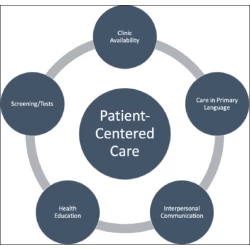
Results:The qualitative data analysis revealed three key themes about women’s perceptions and preferences for prenatal care that meets their needs. First, clinical care processes included provision of health education and medical assessments. Second, structural conditions included language preferences, clinic availability, and the presence of ancillary staff. Finally, interpersonal communication encompassed interactions with providers and continuity of care. Overall, participants desired patient-centered care and care that was informative, tailored to their needs, and worked within the constraints of their daily lives.
Conclusion and Global Health Implications:Women seeking and receiving prenatal care prefer a welcoming, patient-centered health care environment. These findings should prompt health care providers and organizations to improve existing prenatal care models and develop new prenatal care models that provide early, accessible, and high-quality prenatal care to a diverse population of maternity patients.
Downloads
Most read articles by the same author(s)
- Arlin Delgado, Chinyere N. Reid, Emma Hale, Jennifer Marshall, Kimberly Fryer, Evaluation of Virtual Prenatal Care for Obstetric Care Delivery During the COVID-19 Pandemic: A Mixed Method Research Study Using the Consolidated Framework in Implementation Research , International Journal of Maternal and Child Health and AIDS: Vol. 12 No. 2 (2023): International Journal of Maternal and Child Health and AIDS
Similar Articles
- Musawenkosi H L Mabaso, Thoko Ndaba, Zilungile L Mkhize-Kwitshana, Overview of Maternal, Neonatal and Child Deaths in South Africa: Challenges, Opportunities, Progress and Future Prospects , Vol. 2 No. 2 (2014): International Journal of Maternal and Child Health and AIDS
- Temesgen Geta, Eskindir Israe, Buzuayehu Atinafu, Prevalence and Associated Factors of Client Satisfaction with Antenatal Care Services Among Antenatal Care Attendants in Ethiopia: A Systematic Review and Meta-Analysis , Vol. 13 No. Continuous (2024): International Journal of Maternal and Child Health and AIDS
- Mary Stokes, Amber Olson, Mtisunge Chan’gombe, Bakari Rajab, Rachel Pope, Carolyn Mwalwanda, Judy Levison, Isabel Janmey, Reinventing the Pregnancy Wheel to Improve Pregnancy Dating and Antenatal Care Visits: A Pilot Randomized Trial in Malawi , Vol. 10 No. 1 (2021): International Journal of Maternal and Child Health and AIDS
- Natalie C Frayer, Yeonsoo Kim, Caffeine Intake During Pregnancy and Risk of Childhood Obesity: A Systematic Review , Vol. 9 No. 3 (2020): International Journal of Maternal and Child Health and AIDS
- Comfort Z. Olorunsaiye, A-Mac Harris, Korede K. Yusuf, Characteristics of Early Newborn Care: A Descriptive Analysis of Recent Births in Nigeria , Vol. 9 No. 1 (2020): International Journal of Maternal and Child Health and AIDS
- Akinyi E. Imbo, Elizabeth K. Mbuthia, Douglas N. Ngotho, Determinants of Neonatal Mortality in Kenya: Evidence from the Kenya Demographic and Health Survey 2014 , Vol. 10 No. 2 (2021): International Journal of Maternal and Child Health and AIDS
- Gopal K. Singh, Stella M. Yu, Infant Mortality in the United States, 1915-2017: Large Social Inequalities have Persisted for Over a Century , Vol. 8 No. 1 (2019): International Journal of Maternal and Child Health and AIDS
- Wael Hafez, Jalal Al Shareef, Afraa Alyoussef, Mirvat Ghanem, Reem Rizk Abazid, Antesh Yadav, Asrar Rashid, Fardeen Mohammad Sayfoo, Sneha Venkataramani, Pamela Orozco Restrepo, Mohamed Maher Elkott, Vikram Satish Lakshman, Taahira Arief, Alaa Gamal Mohammed, Fatema Abdulaal, Yossef Hossam, Pulmonary Injury as a Complication of Urinary Tract Infection in Pregnancy , Vol. 13 No. Continuous (2024): International Journal of Maternal and Child Health and AIDS
- Manpreet Singh Khurmi, Felix Sayinzoga, Atakilt Berhe, Tatien Bucyana, Assumpta Kayinamura Mwali, Emmanuel Manzi, Maharajan Muthu, Newborn Survival Case Study in Rwanda - Bottleneck Analysis and Projections in Key Maternal and Child Mortality Rates Using Lives Saved Tool (LiST) , Vol. 6 No. 2 (2017): International Journal of Maternal and Child Health and AIDS
- Sara A. Holtz, Rudi Thetard, Sarah N. Konopka, Jennifer Albertini, Anouk Amzel, Karen P. Fogg, A Systematic Review of Interventions to Reduce Maternal Mortality among HIV-Infected Pregnant and Postpartum Women , Vol. 4 No. 2 (2015): International Journal of Maternal and Child Health and AIDS
<< < 1 2 3 4 5 6 7 8 9 10 > >>
You may also start an advanced similarity search for this article.
Published
How to Cite
Issue
Section
License
Copyright © 2023 Kimberly Fryer, Chinyere N. Reid, Naciely Cabral, Jennifer Marshall, Usha Menon. Published by Global Health and Education Projects, Inc., USA.

This is an open-access article distributed under the terms of the Creative Commons Attribution-NonCommercial-ShareAlike 4.0 International License , which permits others to remix, transform, and build upon the work non-commercially, provided the original author is credited and the new creations are licensed under the same terms.