
Exploring Patients’ Needs and Desires for Quality Prenatal Care in Florida, United States
DOI:
https://doi.org/10.21106/ijma.622Keywords:
- Medicaid,
- Patient Preference,
- Patient-Centered Care,
- Pregnancy,
- Prenatal Care,
- Qualitative Research,
- Quality of Health Care,
- United States
Abstract
High-quality prenatal care promotes adequate care throughout pregnancy by increasing patients’ desires to return for follow-up visits. Almost 15% of women in the United States receive inadequate prenatal care, with 6% receiving late or no prenatal care. Only 63% of pregnant women in Florida receive adequate prenatal care, and little is known about their perceptions of high-quality prenatal care. Therefore, the objective of this study was to assess women’s perceptions of the quality of their prenatal care and to describe their preferences for seeking prenatal care that meets their needs.
Methods:From April to December 2019, a qualitative study was conducted with postpartum women (n = 55) who received no or late prenatal care and delivered in Tampa, Florida, USA. Eligible women completed an open-ended qualitative survey and a semi-structured in-depth interview. The interview contextualized the factors influencing prenatal care quality perceptions. The qualitative data analysis was based on Donabedian’s quality of care model.
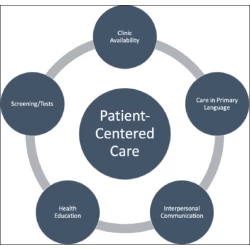
Results:The qualitative data analysis revealed three key themes about women’s perceptions and preferences for prenatal care that meets their needs. First, clinical care processes included provision of health education and medical assessments. Second, structural conditions included language preferences, clinic availability, and the presence of ancillary staff. Finally, interpersonal communication encompassed interactions with providers and continuity of care. Overall, participants desired patient-centered care and care that was informative, tailored to their needs, and worked within the constraints of their daily lives.
Conclusion and Global Health Implications:Women seeking and receiving prenatal care prefer a welcoming, patient-centered health care environment. These findings should prompt health care providers and organizations to improve existing prenatal care models and develop new prenatal care models that provide early, accessible, and high-quality prenatal care to a diverse population of maternity patients.
Downloads
Most read articles by the same author(s)
- Arlin Delgado, Chinyere N. Reid, Emma Hale, Jennifer Marshall, Kimberly Fryer, Evaluation of Virtual Prenatal Care for Obstetric Care Delivery During the COVID-19 Pandemic: A Mixed Method Research Study Using the Consolidated Framework in Implementation Research , International Journal of Maternal and Child Health and AIDS: Vol. 12 No. 2 (2023): International Journal of Maternal and Child Health and AIDS
Similar Articles
- Rajesh Narwal, Lu Gram, Has the Rate of Reduction in Infant Mortality Increased in India Since the Launch of National Rural Health Mission? Analysis of Time Trends 2000-2009 with Projection to 2015 , Vol. 2 No. 1 (2013): International Journal of Maternal and Child Health and AIDS
- Barbara Burmen, Gregory Kurtzman, Anthony A Olashore, Leyla Baghirova Busang, Ohemaa Poku, Phenyo Morakanyane, Ontibile Tshume, Onkemetse Phoi, Mogomotsi Matshaba, Elizabeth D Lowenthal, Knashawn H Morales, Merrian J Brooks, HIV Virologic Suppression and Mental Well-being in Adolescents and Young Adults Living with HIV , Vol. 14 No. Continuous (2025): International Journal of Maternal and Child Health and AIDS
- Christina Kinnevey, Michael Kawooya, Tonny Tumwesigye, David Douglas, Sarah Sams, Addressing Obstetrical Challenges at 12 Rural Ugandan Health Facilities: Findings from an International Ultrasound and Skills Development Training for Midwives in Uganda , Vol. 5 No. 1 (2016): International Journal of Maternal and Child Health and AIDS
- Muhammad Adamu Abbas, Aisha A Abdullahi, Hassan A Murtala, Abubakar L Yusuf, Rahila A Mukhtar, Hamisu M Salihu, New Paradigm for Battling Hospital-Acquired Infections in Developing Countries , Vol. 14 No. Continuous (2025): International Journal of Maternal and Child Health and AIDS
- Matiur Rahman, Kaoser Bin Siddique, Aminur Rahman, Rahidul Islam, Mohammad Mahbub Ur Rahim, Access to and Utilization of Maternal and Child Healthcare Services During COVID-19 Pandemic in Rural Bangladesh , Vol. 13 No. Continuous (2024): International Journal of Maternal and Child Health and AIDS
- Srijana Pandey, Supendra Karki, Socio-economic and Demographic Determinants of Antenatal Care Services Utilization in Central Nepal , Vol. 2 No. 2 (2014): International Journal of Maternal and Child Health and AIDS
- Johnbull Egharevba, Jennifer Pharr, Brian van Wyk, Echezona Ezeanolue, Factors Influencing the Choice of Child Delivery Location among Women Attending Antenatal Care Services and Immunization Clinic in Southeastern Nigeria , Vol. 6 No. 1 (2017): International Journal of Maternal and Child Health and AIDS
- Tsi N Njim, Late Pregnancy Outcomes among Women who Attended and Women who did not Attend First Trimester Antenatal Care Visits in a Suburban Regional Hospital in Cameroon , Vol. 5 No. 1 (2016): International Journal of Maternal and Child Health and AIDS
- Nemati Ali, Tazakori Zahra, Maryam Namadi Vosogh, Nazila Vosoghi, Maryam Zare, Afroz Mardi, Adham Davoud, Hamidzadeh Arbabi Yousef, Kazemzadeh Rafat, Effectiveness Comparison of Mothers’ In-person Versus Written Nutritional Education Intervention on Infant Growth in Iran , Vol. 3 No. 1 (2015): International Journal of Maternal and Child Health and AIDS
- Veronicah A. Wechuli, Monicah W. Karara, Allan T. Wafula, Godfrey W. Mayoka, Impact of COVID-19 on the Utilization of Maternal and Child Health Services at a Regional Referral Hospital in Kenya , Vol. 13 No. Continuous (2024): International Journal of Maternal and Child Health and AIDS
<< < 4 5 6 7 8 9 10 11 12 13 > >>
You may also start an advanced similarity search for this article.
Published
How to Cite
Issue
Section
License
Copyright © 2023 Kimberly Fryer, Chinyere N. Reid, Naciely Cabral, Jennifer Marshall, Usha Menon. Published by Global Health and Education Projects, Inc., USA.

This is an open-access article distributed under the terms of the Creative Commons Attribution-NonCommercial-ShareAlike 4.0 International License , which permits others to remix, transform, and build upon the work non-commercially, provided the original author is credited and the new creations are licensed under the same terms.