
Costs and Patterns of Financing Maternal Health Care Services in Rural Communities in Northern Nigeria: Evidence for Designing National Fee Exemption Policy
DOI:
https://doi.org/10.21106/ijma.21Keywords:
- maternal health,
- maternal healthcare,
- financing,
- rural health care,
- Nigeria,
- health care financing,
- fee exemption
Abstract
As population and access to information increases, so does the demand for health services. Unfortunately, many people who genuinely require these services do not usually have access to them. To increase access, various financing options have been used. Despite this, maternal morbidity and mortality rates remain high and spending is still largely out of pocket. This study assesses maternal health problems, preferred sources of care and the pattern of financing in a semi-rural community in North Western part of Nigeria.
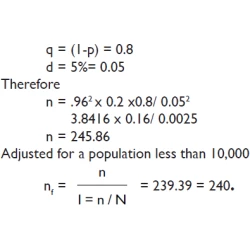
Methodology:A cross-sectional descriptive study design was used. The study population consisted of women within the reproductive age group who had experienced childbirth 12 months or less prior to the study. A sample size of 240 was drawn using cluster and random sampling techniques. Interviewer administered questionnaires were used and the results were analyzed using Statistical Package for Social Sciences (SPSS).
Results:The mean age of the respondents was 29 years and 49% had no personal income. Fever was the commonest problem. Although majority received antenatal care, those who lacked antenatal care mostly cited financial difficulties. Nearly half of the women delivered at home as opposed to a health facility. On average, women spent between Nigerian Naira (N) Nl, 350-NI4,850 (USD$9-99) for a total package of maternal health services. Out of pocket spending by the husbands or household heads and the women themselves accounted for 73.3% of expenses.
Conclusion and Public Health Implications:In Nigeria, women are still vulnerable to common and preventable causes of maternal morbidity and mortality due to lack of access to antenatal health care. Out of pocket spending is still a popular method of financing. Harmonization of fee exemption policies can improve access to maternal healthcare.
Downloads
Similar Articles
- Christina Kinnevey, Michael Kawooya, Tonny Tumwesigye, David Douglas, Sarah Sams, Addressing Obstetrical Challenges at 12 Rural Ugandan Health Facilities: Findings from an International Ultrasound and Skills Development Training for Midwives in Uganda , Vol. 5 No. 1 (2016): International Journal of Maternal and Child Health and AIDS
- Titilayo Olaoye, Oyewole O. Oyerinde, Oluwatoyin J. Elebuji, Oluwapelumi Ologun, Knowledge, Perception and Management of Pre-eclampsia among Health Care Providers in a Maternity Hospital , Vol. 8 No. 2 (2019): International Journal of Maternal and Child Health and AIDS
- Rachael Bonawitz, Kathleen Lucy McGlasson, Jeanette L. Kaiser, Thandiwe Ngoma, Jody Lori, Carol Boyd, Godfrey Biemba, Davidson H. Hamer, Nancy A. Scott, Maternity Waiting Home Use by HIV-positive Pregnant Women in Zambia: Opportunity for Improved Prevention of Maternal to Child Transmission of HIV , Vol. 8 No. 1 (2019): International Journal of Maternal and Child Health and AIDS
- Sara A. Holtz, Rudi Thetard, Sarah N. Konopka, Jennifer Albertini, Anouk Amzel, Karen P. Fogg, A Systematic Review of Interventions to Reduce Maternal Mortality among HIV-Infected Pregnant and Postpartum Women , Vol. 4 No. 2 (2015): International Journal of Maternal and Child Health and AIDS
- Srijana Pandey, Supendra Karki, Socio-economic and Demographic Determinants of Antenatal Care Services Utilization in Central Nepal , Vol. 2 No. 2 (2014): International Journal of Maternal and Child Health and AIDS
- Romuladus Emeka Azuine, Gopal K Singh, Sussan E Ekejiuba, Eta Ashu, Magnus A Azuine, Global Health Donor Presence, Variations in HIV/AIDS Prevalence, and External Resources for Health in Developing Countries in Africa and Asia , Vol. 2 No. 2 (2014): International Journal of Maternal and Child Health and AIDS
- Esum Mathias Eyong, Nwana Yvette Ngwe, Claude Ngwayu Nfuksai, Loveline Lum Niba, Akoachere Jane-Francis, Prevalence of Occupational Exposure to HIV and Factors Associated with Compliance with Post-Exposure Prophylaxis Among Health Workers of the Biyem-Assi, Buea, and Limbe Health Districts of Cameroon Maternal and Child Health and AIDS , Vol. 11 No. 1 (2022): International Journal of Maternal and Child Health and AIDS
- Fatimah Isma’il Tsiga-Ahmed, Taiwo Gboluwaga Amole, Baba Maiyaki Musa, Aishatu Muhammad Nalado, Omeiza Baba Agoyi, Hadiza Shehu Galadanci, Hamisu M. Salihu, COVID 19: Evaluating the Knowledge, Attitude and Preventive Practices of Healthcare Workers in Northern Nigeria , Vol. 10 No. 1 (2021): International Journal of Maternal and Child Health and AIDS
- Veronicah A. Wechuli, Monicah W. Karara, Allan T. Wafula, Godfrey W. Mayoka, Impact of COVID-19 on the Utilization of Maternal and Child Health Services at a Regional Referral Hospital in Kenya , Vol. 13 No. Continuous (2024): International Journal of Maternal and Child Health and AIDS
- Justice Ajaari, Honorati Masanja, Renay Weiner, Shalom Akonvi Abokyi, Seth Owusu-Agyei, Impact of Place of Delivery on Neonatal Mortality in Rural Tanzania , Vol. 1 No. 1 (2012): International Journal of Maternal and Child Health and AIDS
<< < 2 3 4 5 6 7 8 9 10 11 > >>
You may also start an advanced similarity search for this article.
Published
How to Cite
Issue
Section
License
Copyright © 2015 Nnennaya N. Kalu-Umeh, Mohammed N. Sambo N. Sambo, Suleiman H. Idris, Abubakar M. Kurfi. Published by Global Health and Education Projects, Inc., USA.

This is an open-access article distributed under the terms of the Creative Commons Attribution-NonCommercial-ShareAlike 4.0 International License , which permits others to remix, transform, and build upon the work non-commercially, provided the original author is credited and the new creations are licensed under the same terms.