
Costs and Patterns of Financing Maternal Health Care Services in Rural Communities in Northern Nigeria: Evidence for Designing National Fee Exemption Policy
DOI:
https://doi.org/10.21106/ijma.21Keywords:
- maternal health,
- maternal healthcare,
- financing,
- rural health care,
- Nigeria,
- health care financing,
- fee exemption
Abstract
As population and access to information increases, so does the demand for health services. Unfortunately, many people who genuinely require these services do not usually have access to them. To increase access, various financing options have been used. Despite this, maternal morbidity and mortality rates remain high and spending is still largely out of pocket. This study assesses maternal health problems, preferred sources of care and the pattern of financing in a semi-rural community in North Western part of Nigeria.
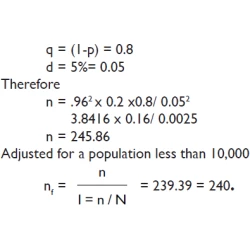
Methodology:A cross-sectional descriptive study design was used. The study population consisted of women within the reproductive age group who had experienced childbirth 12 months or less prior to the study. A sample size of 240 was drawn using cluster and random sampling techniques. Interviewer administered questionnaires were used and the results were analyzed using Statistical Package for Social Sciences (SPSS).
Results:The mean age of the respondents was 29 years and 49% had no personal income. Fever was the commonest problem. Although majority received antenatal care, those who lacked antenatal care mostly cited financial difficulties. Nearly half of the women delivered at home as opposed to a health facility. On average, women spent between Nigerian Naira (N) Nl, 350-NI4,850 (USD$9-99) for a total package of maternal health services. Out of pocket spending by the husbands or household heads and the women themselves accounted for 73.3% of expenses.
Conclusion and Public Health Implications:In Nigeria, women are still vulnerable to common and preventable causes of maternal morbidity and mortality due to lack of access to antenatal health care. Out of pocket spending is still a popular method of financing. Harmonization of fee exemption policies can improve access to maternal healthcare.
Downloads
Similar Articles
- Stella Yu, Sue Lin, Bonnie Strickland, Disparities in Health Care Quality Indicators among US Children with Special Health Care Needs According to Household Language Use , Vol. 4 No. 1 (2015): International Journal of Maternal and Child Health and AIDS
- Issaka Saouadogo, Douglas Mbang Massom, Soutongnoma Safiata Kabore, Ronny Kevin Fomete Djatsa, Josiane Seu, Patrice Ngangue, Perceived Benefits and Disadvantages Associated with the Use of the Electronic Consultation Register by Health Providers in the Health District of Toma, Burkina Faso , Vol. 13 No. Continuous (2024): International Journal of Maternal and Child Health and AIDS
- Muhammad Adamu Abbas, Aisha A Abdullahi, Hassan A Murtala, Abubakar L Yusuf, Rahila A Mukhtar, Hamisu M Salihu, New Paradigm for Battling Hospital-Acquired Infections in Developing Countries , Vol. 14 No. Continuous (2025): International Journal of Maternal and Child Health and AIDS
- Mehrete Girmay, Digital Health Divide: Opportunities for Reducing Health Disparities and Promoting Equitable Care for Maternal and Child Health Populations , Vol. 13 No. Continuous (2024): International Journal of Maternal and Child Health and AIDS
- Matiur Rahman, Kaoser Bin Siddique, Aminur Rahman, Rahidul Islam, Mohammad Mahbub Ur Rahim, Access to and Utilization of Maternal and Child Healthcare Services During COVID-19 Pandemic in Rural Bangladesh , Vol. 13 No. Continuous (2024): International Journal of Maternal and Child Health and AIDS
- Comfort Z. Olorunsaiye, A-Mac Harris, Korede K. Yusuf, Characteristics of Early Newborn Care: A Descriptive Analysis of Recent Births in Nigeria , Vol. 9 No. 1 (2020): International Journal of Maternal and Child Health and AIDS
- Hasiya Tijjani Ismail, Taiwo G Amole, Fatima I Tsiga-Ahmed, Rabiu I Jalo, Aishatu L Adamu, Mahmoud U Sani, Hamisu M Salihu, William Wester, Muktar H Aliyu, Factors Associated with Utilization of Sexual and Reproductive Health Services among Married Adolescent Girls in Kano, Northern Nigeria , Vol. 13 No. Continuous (2024): International Journal of Maternal and Child Health and AIDS
- Musawenkosi H L Mabaso, Thoko Ndaba, Zilungile L Mkhize-Kwitshana, Overview of Maternal, Neonatal and Child Deaths in South Africa: Challenges, Opportunities, Progress and Future Prospects , Vol. 2 No. 2 (2014): International Journal of Maternal and Child Health and AIDS
- Akinyi E. Imbo, Elizabeth K. Mbuthia, Douglas N. Ngotho, Determinants of Neonatal Mortality in Kenya: Evidence from the Kenya Demographic and Health Survey 2014 , Vol. 10 No. 2 (2021): International Journal of Maternal and Child Health and AIDS
- Johnbull Egharevba, Jennifer Pharr, Brian van Wyk, Echezona Ezeanolue, Factors Influencing the Choice of Child Delivery Location among Women Attending Antenatal Care Services and Immunization Clinic in Southeastern Nigeria , Vol. 6 No. 1 (2017): International Journal of Maternal and Child Health and AIDS
<< < 1 2 3 4 5 6 7 8 9 10 > >>
You may also start an advanced similarity search for this article.
Published
How to Cite
Issue
Section
License
Copyright © 2015 Nnennaya N. Kalu-Umeh, Mohammed N. Sambo N. Sambo, Suleiman H. Idris, Abubakar M. Kurfi. Published by Global Health and Education Projects, Inc., USA.

This is an open-access article distributed under the terms of the Creative Commons Attribution-NonCommercial-ShareAlike 4.0 International License , which permits others to remix, transform, and build upon the work non-commercially, provided the original author is credited and the new creations are licensed under the same terms.