
Costs and Patterns of Financing Maternal Health Care Services in Rural Communities in Northern Nigeria: Evidence for Designing National Fee Exemption Policy
DOI:
https://doi.org/10.21106/ijma.21Keywords:
- maternal health,
- maternal healthcare,
- financing,
- rural health care,
- Nigeria,
- health care financing,
- fee exemption
Abstract
As population and access to information increases, so does the demand for health services. Unfortunately, many people who genuinely require these services do not usually have access to them. To increase access, various financing options have been used. Despite this, maternal morbidity and mortality rates remain high and spending is still largely out of pocket. This study assesses maternal health problems, preferred sources of care and the pattern of financing in a semi-rural community in North Western part of Nigeria.
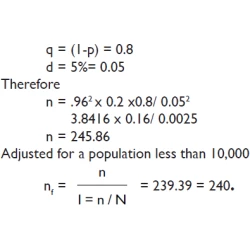
Methodology:A cross-sectional descriptive study design was used. The study population consisted of women within the reproductive age group who had experienced childbirth 12 months or less prior to the study. A sample size of 240 was drawn using cluster and random sampling techniques. Interviewer administered questionnaires were used and the results were analyzed using Statistical Package for Social Sciences (SPSS).
Results:The mean age of the respondents was 29 years and 49% had no personal income. Fever was the commonest problem. Although majority received antenatal care, those who lacked antenatal care mostly cited financial difficulties. Nearly half of the women delivered at home as opposed to a health facility. On average, women spent between Nigerian Naira (N) Nl, 350-NI4,850 (USD$9-99) for a total package of maternal health services. Out of pocket spending by the husbands or household heads and the women themselves accounted for 73.3% of expenses.
Conclusion and Public Health Implications:In Nigeria, women are still vulnerable to common and preventable causes of maternal morbidity and mortality due to lack of access to antenatal health care. Out of pocket spending is still a popular method of financing. Harmonization of fee exemption policies can improve access to maternal healthcare.
Downloads
Similar Articles
- Manpreet Singh Khurmi, Felix Sayinzoga, Atakilt Berhe, Tatien Bucyana, Assumpta Kayinamura Mwali, Emmanuel Manzi, Maharajan Muthu, Newborn Survival Case Study in Rwanda - Bottleneck Analysis and Projections in Key Maternal and Child Mortality Rates Using Lives Saved Tool (LiST) , Vol. 6 No. 2 (2017): International Journal of Maternal and Child Health and AIDS
- Gopal K. Singh, Hyunjung Lee, Trends and Racial/Ethnic, Socioeconomic, and Geographic Disparities in Maternal Mortality from Indirect Obstetric Causes in the United States, 1999-2017 , Vol. 10 No. 1 (2021): International Journal of Maternal and Child Health and AIDS
- Brianna L. Smith, Sara Zizzo, Anouk Amzel, Sarah Wiant, Molly C. Pezzulo, Sarah Konopka, Rachel Golin, Alexandra C. Vrazo, Integration of Neonatal and Child Health Interventions with Pediatric HIV Interventions in Global Health , Vol. 7 No. 1 (2018): International Journal of Maternal and Child Health and AIDS
- Abubakar Sadiq Umar, Samuel Bitrus Bawa, Antenatal Care Services Utilization in Yobe State, Nigeria: Examining Predictors and Barriers , Vol. 4 No. 1 (2015): International Journal of Maternal and Child Health and AIDS
- Gerald J. Makuka, Moses M. Sango, Ayubu E. Mashambo, Abednego E. Mashambo, Sia E. Msuya, Sabina P. Mtweve, Clients’ Perspectives on Quality of Delivery Services in a Rural Setting in Tanzania: Findings from a Qualitative Action-Oriented Research , Vol. 6 No. 1 (2017): International Journal of Maternal and Child Health and AIDS
- Anastasia Y. Bongajum, Pascal Foumane, Charlotte O. Moussi, Noel Vogue, Hycinth S. Banseka, Jujlius M. Nwobegahay, Martina L. Baye, Strengthening Maternal Death Surveillance Systems for Evidence-Based Decision Making in Sub-Saharan Africa: The Case of the Center Region in Cameroon , Vol. 10 No. 2 (2021): International Journal of Maternal and Child Health and AIDS
- Ikenna J. Nwakamma, Amber Erinmwinhe, Arinzechukwu Ajogwu, Aniekan Udoh, Anne Ada-Ogoh, Mitigating Gender and Maternal and Child Health Injustices through Faith Community-Led Initiatives , Vol. 8 No. 2 (2019): International Journal of Maternal and Child Health and AIDS
- Eshetu Bekele Worku, Selamawit Alemu Woldesenbet, Factors that Influence Teenage Antenatal Care Utilization in John Taolo Gaetsewe (JTG) District of Northern Cape Province, South Africa: Underscoring the Need for Tackling Social Determinants of Health , Vol. 5 No. 2 (2016): International Journal of Maternal and Child Health and AIDS
- Joel M. Njah, Gregory E. Halle-Ekane, Sylvester N. Atanga, Edouard K. Tshimwanga, Felix Desembuin, Pius T. Muffih, From Option B+ to Universal “Test and Treat” in Cameroon: Identification and Evaluation of District-level Factors Associated with Retention in Care , Vol. 12 No. 2 (2023): International Journal of Maternal and Child Health and AIDS
- Kolawole A. Fasakin, Christopher T. Omisakin, Idowu O. Adebara, Wasiu A. Ajetunmobi, Adebayo A. Adeniyi, Ayodele J. Esan, Olufunke B. Bolaji, Oluwafemi D. Ajayi, Abayomi J. Afe, Assessment of PMTCT Success Rates Based on Antiretroviral Interventions and Feeding Options: A Prospective Cohort Study , Vol. 7 No. 2 (2018): International Journal of Maternal and Child Health and AIDS
<< < 1 2 3 4 5 6 7 8 9 10 > >>
You may also start an advanced similarity search for this article.
Published
How to Cite
Issue
Section
License
Copyright © 2015 Nnennaya N. Kalu-Umeh, Mohammed N. Sambo N. Sambo, Suleiman H. Idris, Abubakar M. Kurfi. Published by Global Health and Education Projects, Inc., USA.

This is an open-access article distributed under the terms of the Creative Commons Attribution-NonCommercial-ShareAlike 4.0 International License , which permits others to remix, transform, and build upon the work non-commercially, provided the original author is credited and the new creations are licensed under the same terms.